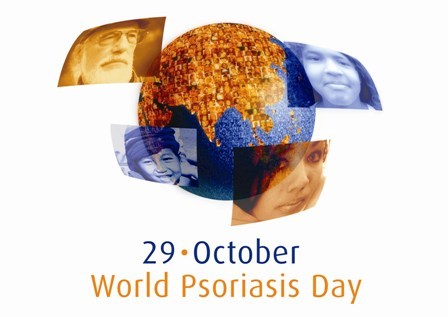
NPF Experts Discuss World Psoriasis Day Impact

10/30/2017

World Psoriasis Day, an awareness day dedicated to the 125 million people diagnosed with psoriasis around the world, was created by The International Federation of Psoriasis Association and recently took place on October 29, 2017. The theme this year was Psoriasis Inside Out.

Members of the National Psoriasis Foundation’s medical board recently spoke with The Dermatologist to discuss the importance of the awareness day and its impact, as well as what patients and dermatologists can take away from the event.

Increasing Awareness

Having a recognition day such as this provides a global spotlight on this important public health issue of psoriasis, noted Lawrence J Green, an assistant clinical professor of dermatology at George Washington University School of Medicine.

“World Psoriasis Day helps to increase awareness for both people living with psoriasis and their loved ones and also for people who know little about psoriasis. It’s about recognition. Recognition demonstrates to people with psoriasis and their loved ones that the world is listening to them. It raises awareness about the condition to those who know little about psoriasis, hopefully encouraging them to learn more about this disease that is about inflammation occurring throughout the body, not just on the skin,” he said.

Ron Prussick, MD, assistant clinical professor, department of dermatology at George Washington University and medical director, Washington Dermatology Center explained, “This is a very important day for people with psoriatic diseases because it is an opportunity to educate the public. As this is a visible disease, the public needs to understand this is a disease of the immune system and it not infectious or contagious. The goal is to develop a cure but until then, with better knowledge about the disease there will be more tolerance and understanding in the future.”

Impact and Treatment

One goal of the awareness day is to help communicate that psoriasis is a common, important medical condition that can impact the quality and quantity of a patient’s life, according to Richard G.B. Langley MD, FRCPC, a professor of dermatology, division of dermatology, department of medicine, at Dalhousie University.

“Specifically, psoriasis has a profound negative impact on the quality of life for patients and their families, and has a number of significant comorbidities that can cause disabilities and can impact the life expectancy of certain patients,” he said. “With the advent of newer targeted therapies, there is reason for significant hope. However, there is a significant work that needs to be done to provide access of these therapies for this important medical condition and the more awareness raised around this condition, the better.”

Rick Fried, MD, PhD, a dermatologist and clinical psychologist and clinical director Yardley Dermatology Associates/Yardley Clinical Research Associates, noted the day of recognition is an opportunity to discuss and appreciate the psychosocial impact of the disease. “I believe that World Psoriasis Day legitimizes the feelings, physical and emotional burdens, and systemic comorbidities of psoriasis…. a skin, body, and mind inflammatory disease,” he said. “This is a sunset of hope and opportunity. Today there are numerous elegant treatments that can liberate psoriasis sufferers allowing them to live full and unencumbered lives.”

By recognizing that they are not alone, patients can seek treatment and support through the health care community. “World Psoriasis Day encourages patients and dermatologists to make a change today so that those dealing with psoriasis in the future may not be so heavily impacted,” said Jashin J. Wu, MD, director, clinical dermatology research, associate director, the Dermatology Residency Program Kaiser Permanente, Los Angeles Medical Center.

“I would hope that patients take away that professional organizations around the world, like the National Psoriasis Foundation are advocating for them. I would hope that professionals see that patients are not giving up on their disease and continue to be active despite the psoriasis,” he said.

Jerry Bagel MD, MS, director, Psoriasis Treatment Center of Central New Jersey, and senior attending physician, University Medical Center, agreed. “I hope patients and professionals recognize that today there are extremely effective, relatively safe treatments that can effectively treat psoriasis.”

Community for a Cure

“By increasing awareness of this disease throughout the world we hope to let patients and professionals know our goal is to study the cause and develop a cure. We want people with psoriasis to know there is support for them from both the public and medical professional community,” said Dr Prussick.

View Article

Bellies, Bulges and Love Handles. What can we do?

by Richard Fried, MD PhD

Why are they so bothersome? What can we do?

Our satisfaction with the appearance of our bodies is largely determined by societal norms. Currently, these suggest that our stomachs should be firm and flat. Similarly, our hips should be smooth, tight, and gradually sloping. These “rules” are imprinted into our brains via numerous teaching tools such as television, movies, magazines, and social media. The beautiful people and their perfect bodies are in our faces almost at every turn.

Enter “the evil mirrors” – those nasty tormentors that are constantly reminding most of us that we fall short of these ideal proportions. The reality is, that attaining and maintaining the “ideal body” is phenomenally difficult and for most of us, not realistically possible even if we subsisted on salad greens eaten after 7 hour daily visits to the gym. For those lucky people who were born with that perfect body, fear not, time will win! With a bit of maturity (defined as age, childbirth, menopause, andropause, life’s demands, trials, and tribulations), the bellies, bulges, and love handles will make their unwelcome appearance. None of us are immune – they will come.

Simply and sadly stated, bellies, bulges, and love handles “violate” the societal rules of proportion. Our negative self-talk about these unwanted body contours can make us feel badly. Sometimes, these unwanted body contours can be subject to or cause friction resulting in skin discomfort and/or rashes that “feel bad”. Many patients have told us that the belly, bulge, or love handle is a source of self consciousness and preoccupation. Internal dialogues such as “I hate these”, “I can’t stand it”, “this makes me feel old” can be ever present intrusions, distracting us from fully enjoying the present. If only we had the perfect body, all would be well and our lives would be perfect. NOT SO!

Please don’t let this get you down – this is about to get cheerier!

Perfection does not exist! One of the keys to happiness is accepting and embracing our imperfections (and we all have a big bunch of them!). Acceptance of the fact that imperfection defines the human experience can lead to great emotional relief. Acceptance of imperfection can allow us to exhale and stop trying so furiously to “be perfect”.

Good enough can be great. Accepting that perfection is unattainable and probably emotionally unhealthy, we can talk about what actually appears to make people happy. Improvement! Better appearance, less bulge, and less belly.

Good enough or modest improvement can be EXTREMELY SATISFYING and LIBERATING. Looking in that same mirror and seeing a smaller belly, bulge, or love handle can help to decrease self-consciousness and diminish intrusive and upsetting “self talk”. Positive change that we associate with attractiveness and health is empowering.

Call us for a free consultation. Yardley Dermatology is a cutting-edge laser and skin rejuvenation center. We have the gentle and safe laser and radio frequency technologies proven to reduce the burden of unwanted bulges, bellies, and love handles.

Click here to learn more about our Vanquish technology.

Uncovering the Emotional Impact of Psoriatic Disease

WASHINGTON, April 19, 2016 /PRNewswire-USNewswire

To ensure that people living with psoriasis and psoriatic arthritis have access to the treatments needed to manage their disease, the National Psoriasis Foundation (NPF) will hold a congressional briefing today to address the emotional and mental implications of psoriatic disease.

This briefing will include Cyndi Lauper, pop icon and spokeswoman for “I’m PsO Ready,” a national initiative driven by NPF and Novartis Pharmaceuticals Corporation to highlight the physical, emotional and social challenges of psoriasis. The briefing will also include NPF medical board member, board-certified dermatologist and clinical psychologist Dr. Richard Fried of Yardley Dermatology and Yardley Clinical Research Associates.

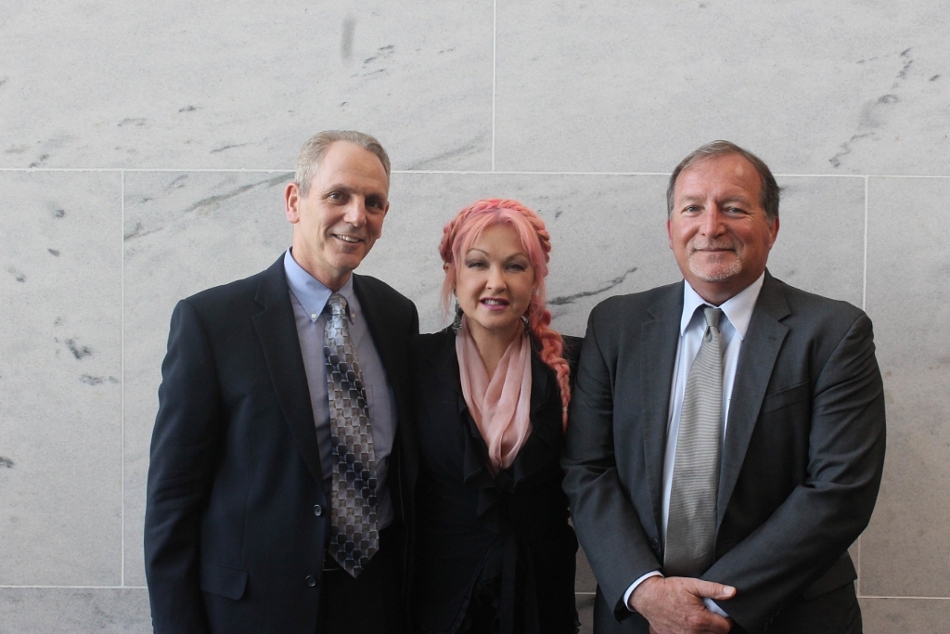
Dr. Richard Fried, NPF medical board member, Cyndi Lauper, pop icon and “I’m PsO Ready” spokeswoman, and Randy Beranek, president of the National Psoriasis Foundation conduct congressional briefing on the emotional and mental impact of psoriatic disease.
In addition to dealing with the physical suffering and an increased risk of comorbidities, such as cardiovascular disease and diabetes, many patients struggle with depression and a reduced quality of life due to the social stigma associated with psoriatic disease.

Recent studies have found that those living with psoriasis have a 39 percent increased risk of being diagnosed with depression than those without the disease. Those with a combination of both psoriasis and psoriatic arthritis suffer higher rates of anxiety and depression than those with psoriasis alone.

For many, treating their disease is the first step in reducing the risk of depression and improving overall quality of life. However, lack of access, lack of appropriate diagnosis, and lack of resources to get medication limit many patients from treating their disease. Congress can help address these issues by removing barriers that are making it hard for patients to treat their disease.

“The goal of this briefing is to ask Congress to support initiatives that provide better access for patients to effectively treat their disease, said Randy Beranek, president of the National Psoriasis Foundation. “By addressing the significant impact psoriatic disease has on patients’ overall quality of life, we are getting closer to achieving our goal of dramatically improving health outcomes for all with psoriatic disease.”

For more information about psoriatic disease, visit www.psoriasis.org and http://www.moretopsoriasis.com/index.jsp

About the National Psoriasis Foundation

National Psoriasis Foundation (NPF) is the world’s largest nonprofit dedicated to people with psoriasis and psoriatic arthritis. Our priority is to provide the services people need to take control of their condition, while increasing research to find a cure. In addition to serving more than 2.1 million people annually through our health education and advocacy initiatives, NPF has funded more than $13 million in research grants and fellowships. Learn more about the Psoriasis Foundation at www.psoriasis.org or call 800-723-9166. Follow us on Facebook and Twitter.

Read Original Article

Reveal Skin Analysis Advanced Technology

Reveal looks deep in the skin’s layers to assess:

• Brown Spots
• Fine Lines and Wrinkles
• Acne
• Enlarged Pore Size
• Skin Tone and Texture
• UVA Sun Damage
• Laxity of the Skin
• Enlarged Pore Size
• Diffuse Redness

The Reveal Skin Analysis is an advanced technology that allows us to get a baseline of your current skin condition to formulate a customized treatment plan for you. This in-depth analysis will give you a well-educated foundation towards achieving healthy, glowing, younger looking skin. Contact us today for more information.